The XPENG G6 works well as a five-seat family EV in Australia because its numbers match normal household use rather than only performance marketing. The 2026 Australian range offers 470–525 km WLTP range, a 571-litre boot, 1,374 litres with the rear seats folded, and up to 451 kW DC charging. ANCAP awarded the G6 five stars, with 88% Adult Occupant Protection and 86% Child Occupant Protection. Rear ISOFIX points, seven airbags and a 2.89-metre wheelbase add practical family value. For families needing five seats, strong safety results and short charging stops, the G6 is a realistic everyday EV rather than a specialist electric car.
At 4,758 mm long, 1,920 mm wide and around 1,650 mm high, the G6 sits in the part of the SUV market where exterior size still works in suburban car parks while the long 2,890 mm wheelbase leaves useful room for two adults and three rear passengers. The flat EV floor removes a large transmission tunnel, so the centre rear position is easier to use than in many combustion SUVs. In 2026 specification, every Australian G6 has five seats rather than seven, which keeps the second row and luggage area relatively generous.
That cabin layout matters more once child seats are fitted. Rear ISOFIX mounting points are standard, and the G6 carries seven airbags together with autonomous emergency braking, lane-keeping assistance, blind-spot monitoring, rear cross-traffic alert and driver-state monitoring. ANCAP testing gave it 86% for Child Occupant Protection and 88% for Adult Occupant Protection, while Safety Assist scored 80%. A five-star result does not remove the need to fit child restraints correctly, but it gives families an independent 2024 assessment rather than relying only on manufacturer claims.
ANCAP also gave the G6 81% for Vulnerable Road User Protection, covering how its safety systems respond to pedestrians, cyclists and other road users. That is relevant around schools, shopping areas and residential streets, where low-speed traffic and people moving around parked cars are common.
Safety is only useful in a family SUV if the cabin can handle daily equipment, and the boot is one of the stronger numbers here. The luggage area holds 571 litres with all five seats in use and 1,374 litres with the rear seats folded. A pram, weekly groceries and school bags can therefore share the boot without requiring the second row to be folded on an ordinary trip. Families carrying bikes, flat-pack furniture or camping gear gain more flexibility from the 1,374-litre maximum.
The weight figures also deserve attention because payload can become relevant on holidays. The RWD Long Range weighs about 2,115 kg and has a 2,590 kg gross vehicle mass, leaving roughly 475 kg of payload. Five occupants averaging 70 kg would use 350 kg, leaving around 125 kg for luggage and accessories. The AWD Performance has a 470 kg payload, so a fully occupied car with heavy holiday luggage requires more planning than the large boot alone suggests.
Range is less restrictive. The RWD Standard Range uses a 68.5 kWh LFP battery and is rated at 480 km WLTP on 18-inch wheels, falling to 470 km with 20-inch wheels. The RWD Long Range has an 80.8 kWh LFP battery and 525 km WLTP range, while the AWD Performance manages 510 km despite producing 358 kW and 660 Nm. Official consumption is 16.6 kWh/100 km for the Standard Range on 18-inch wheels and 17.9 kWh/100 km for the Long Range.
| Australian G6 version | Battery | WLTP range | DC peak | 10–80% claim |
|---|---|---|---|---|
| RWD Standard Range | 68.5 kWh LFP | 480 km on 18-inch wheels | 382 kW | 12 min |
| RWD Long Range | 80.8 kWh LFP | 525 km | 451 kW | 12 min |
| AWD Performance | 80.8 kWh LFP | 510 km | 451 kW | 12 min |
WLTP figures are controlled-test results, so Australian motorway speeds, summer air-conditioning, cold mornings, hills, roof accessories and a full passenger load can reduce actual distance. Even if a 525 km WLTP rating were 20% lower in a demanding trip, the resulting figure would still be about 420 km. That provides enough margin for many intercity family journeys without turning every stop into a charging stop.
Charging is where the 2026 G6 differs from many earlier family EVs. The Long Range and AWD versions can accept up to 451 kW DC, while the Standard Range reaches 382 kW. XPENG quotes 10–80% in 12 minutes when battery temperature and charger output allow it. A 70% refill of the 80.8 kWh pack represents roughly 56.6 kWh of gross battery capacity, so the charging system has to sustain very high power rather than briefly touching a headline peak.
Public charging will not always deliver 451 kW, and a lower-rated charger will extend the stop. At home, every version supports 11 kW AC charging. XPENG lists 5–100% AC times of about 7.3 hours for the 68.5 kWh Standard Range and 9.2 hours for the 80.8 kWh versions. For a household that parks overnight, that schedule is easier to live with than depending on public charging several times each week.
That home-charging pattern also changes the way range is used. A petrol SUV is usually refuelled after much of the tank has been consumed; an EV can begin many mornings near the owner's preferred charge level. Someone travelling 50 km per weekday would cover about 250 km across five working days, under 48% of the Long Range model's 525 km WLTP figure. Even after allowing for real-world losses, the weekly distance remains well inside one battery cycle for many suburban households.
The suspension and performance specifications suit family use without making every version excessively powerful. The Standard Range produces 185 kW and 440 Nm and reaches 100 km/h in 6.94 seconds, while the Long Range produces 218 kW and takes 6.7 seconds. The AWD Performance cuts that figure to 4.13 seconds with 358 kW. Most families gain more from the Long Range model's distance and 475 kg payload than from reducing the 0–100 km/h time by more than 2.5 seconds.
Ride comfort is supported by double-wishbone front suspension and a five-link independent rear layout on the published Australian specification. Wheel choice can still change the experience: the Standard Range delivers 480 km WLTP with 18-inch wheels but 470 km with optional 20-inch wheels, a reduction of about 2.1%. Smaller wheels can also leave more tyre sidewall between the road and the cabin, worth considering on coarse regional surfaces rather than choosing purely by appearance.
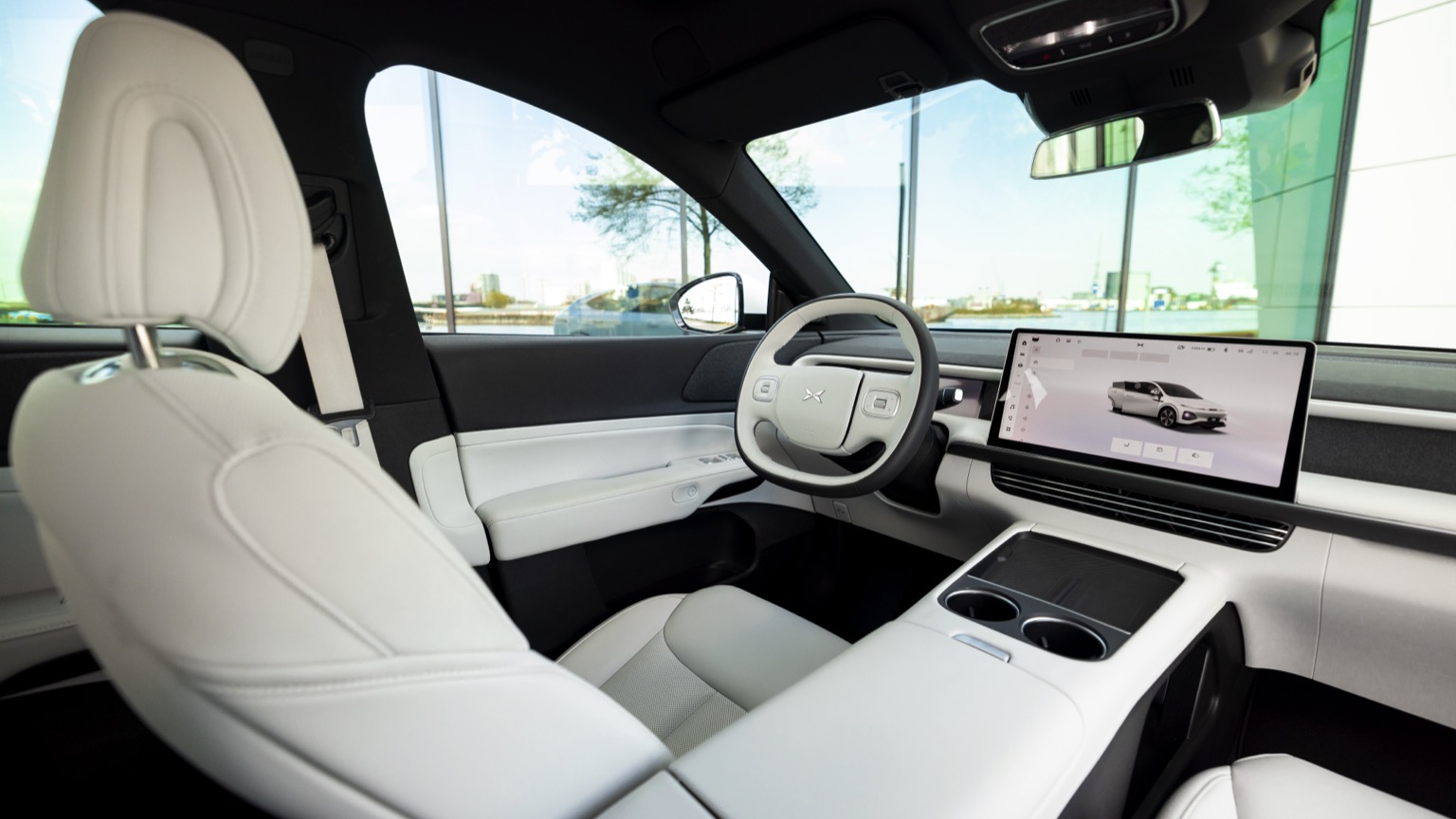
Inside, the G6 uses a 10.25-inch digital instrument display and a 15.6-inch central touchscreen, with Apple CarPlay, Android Auto, navigation, voice control and over-the-air updates. Front seating on the current model includes power adjustment, heating and ventilation on relevant specifications, while XPENG also promotes massage functions on equipped versions. Families comparing suv cars australia may want to spend part of the test drive using climate, navigation and parking functions because the cabin relies heavily on its digital interface.
Parking hardware helps compensate for the 1.92-metre body width. The equipment list includes a surround-view camera system, enhanced automatic parking and auto-exit parking support on applicable variants. The published turning radius is 5.8 metres. A family regularly using older shopping-centre car parks should still check door-opening space with child seats fitted, because exterior width affects daily convenience even when cameras make positioning easier.
Vehicle-to-load adds another practical use for the battery. The Long Range and Performance versions provide up to 6 kW V2L output, allowing compatible camping equipment, small appliances or other electrical devices to run from the car. For households that camp several times a year, the feature can replace part of the portable power equipment normally carried separately.
Ownership support matters more for a newer Australian brand than another tenth of a second in acceleration. XPENG currently states a 7-year/unlimited-kilometre whole-vehicle warranty for private use, while commercial vehicles receive 7 years or 160,000 km. The traction battery, battery management system, motor and intelligent power unit receive 8 years or 160,000 km, and roadside assistance runs for 7 years from first registration. Scheduled servicing is required every 12 months or 20,000 km.
The service network is still developing, so location should form part of the purchase check. In July 2026, XPENG said it planned up to 50 Australian sales outlets within six months, together with three flagship experience centres, and reported that its genuine-parts warehouse in Melbourne was already operating. A buyer living far from an authorised service point should compare travel distance with the 12-month service interval before choosing the car.
Five seats remain the largest family limitation. Households regularly transporting six or seven people will need another vehicle format regardless of the G6's 571-litre boot or 525 km range. For two adults with one to three children, however, its dimensions are much easier to justify: there is no third row consuming luggage space, rear ISOFIX is standard, and the long wheelbase gives the second row more room than the sloping coupé-style roof might suggest.
For a five-person household, the strongest case comes from the combination of 86% ANCAP Child Occupant Protection, 571 litres of boot space, up to 525 km WLTP range and a claimed 12-minute 10–80% fast charge. Families that can charge at home and have an authorised service outlet within practical reach are the ones most likely to use those specifications without making major changes to normal weekly travel.