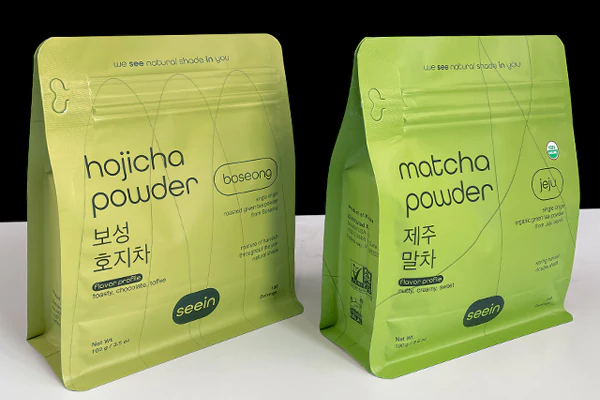
For personalized coffee packaging, digital printing is usually the best fit below roughly 5,000–10,000 units per SKU because it removes plate-making, supports variable artwork, and allows each pouch to carry different origins, roast dates, QR codes, or batch information. Flexographic printing becomes more economical as repeat volumes rise, while gravure is generally reserved for very large, stable runs where cylinder costs can be spread across tens or hundreds of thousands of packs. A 2001 coffee shelf-life study found that increasing oxygen partial pressure from 0.5 to 21.3 kPa accelerated deterioration about 20-fold, so print quality must always be considered together with barrier material, seals, and valve construction.
Printing choice starts with run length because every process handles fixed setup costs differently. Digital presses print directly from artwork files, while flexographic presses require plates and gravure presses require engraved cylinders. For a roaster selling 8 origins at 2,000 bags each, digital production can avoid preparing tooling for 8 separate designs. The same economics change when one espresso blend sells 150,000 bags with almost no artwork changes, where plate-based production can spread setup costs across a much larger quantity. HP documentation for earlier Indigo label systems, for example, described short-run applications below 500 linear meters as an area where digital production could reduce waste compared with conventional printing.
That difference in setup also changes how a coffee company can manage inventory. Ordering 50,000 printed bags for a coffee that may only sell 20,000 leaves 60% of the run exposed to recipe changes, origin changes, labeling updates, or a redesign. Digital production allows smaller replenishment batches, although the exact break-even quantity depends on pouch size, substrate, ink coverage, finishing, press configuration, and local converter pricing. Flexible Packaging Association workflows vary widely, so a supplier quote should separate printing, plates or cylinders, lamination, pouch making, valves, and freight rather than present one unit price.
A low bag price is not necessarily a low packaging cost. If 15% of preprinted inventory becomes obsolete, the unused bags can erase savings created by a larger print run.
Once order volume is clear, artwork complexity becomes the next filter. Digital printing handles photographs, gradients, small version changes, and variable data without making a new physical plate for each design. HP has documented flexible-packaging systems with up to 7 ink stations, including white, and variable-data workflows can make individual pieces different within the same production stream. A subscription roaster could therefore keep one brand layout while changing farm name, harvest year, tasting notes, roast profile, sequence number, or QR destination across several versions.
Flexography is more appropriate when those versions settle into repeatable production. Modern wide-web flexographic plates can use surface screening around 1,400–2,400 LPI, while typical process-image screening may sit around 120–175 LPI, according to technical material from the Flexographic Technical Association. That level of control can produce smooth solids and detailed graphics on film, but plate condition, anilox selection, ink viscosity, impression pressure, and registration still affect the finished pouch. A brand using a large dark background should therefore request an actual press proof or converted sample rather than approve color from a laptop screen.
| Production situation | Printing option usually worth quoting first | Main reason |
|---|---|---|
| 500–5,000 bags per design | Digital | No conventional plates; easy artwork changes |
| 5,000–50,000 repeat bags | Digital + flexo comparison | Economics depend heavily on size and SKU count |
| 50,000+ stable bags | Flexographic | Setup can be spread across longer production |
| Very large, long-running retail programs | Gravure | Consistency and high-volume production |
| Paper cartons or sleeves | Offset | Sharp text and detailed paperboard graphics |
The ranges above are purchasing guides rather than technical limits. A 10,000-unit run containing 10 designs behaves differently from 10,000 identical pouches: each design averages only 1,000 units. That is why SKU count should be shown on every request for quotation. Printers also need final dimensions, repeat length, number of colors, substrate structure, finish, zipper specification, valve position, and annual expected volume before giving a useful comparison.
Material selection comes next because coffee freshness depends more on package protection than on decorative print. A controlled 2001 study stored roasted ground coffee across oxygen partial pressures of 0.5–21.3 kPa, water activity values of 0.106–0.408, and temperatures of 4–35°C. Raising oxygen from 0.5 to 21.3 kPa increased deterioration about 20 times; raising water activity by 0.1 increased the deterioration rate by about 60%. A beautiful print therefore cannot compensate for a poorly selected barrier film or weak seal.
That requirement affects how ink and film are arranged. Many flexible coffee bags use multilayer structures in which one layer provides printability, another contributes strength or sealing, and another reduces oxygen or moisture transmission. Reverse printing can place ink behind a clear outer film so graphics are protected from rubbing during filling, shipping, and retail handling. A 2015 packaging study using a roughly 7 μm barrier coating on polypropylene coffee capsules reported about a 35-fold reduction in oxygen permeability, showing how strongly a thin functional layer can change package performance.
Paper-look packaging needs the same scrutiny. Kraft surfaces can make white, yellow, pale blue, and other light colors appear darker because the brown substrate influences the printed result. A white ink layer may be needed below selected graphics when color accuracy matters. Matte films can create a similar natural appearance while offering a more controlled printing surface. When brands evaluate compostable pouches, the converter should provide the complete material specification, barrier data, sealing range, printing compatibility, and applicable compostability certification rather than treating the outer appearance as proof of end-of-life performance.
Certification language also needs precision. Industrial compostability standards such as EN 13432 and ASTM D6400 evaluate defined conditions and requirements; they do not automatically state that a package will break down in a backyard compost pile or in every municipal system. A pouch containing a zipper, valve, adhesive, ink, and several film layers should be assessed as a finished packaging structure when a certification claim is being made. For a 2026 packaging launch, certification scope and local collection infrastructure should be checked before artwork is printed because environmental wording placed on 30,000 finished bags is expensive to correct afterward.
Coffee degassing adds another production constraint. Roasted beans continue releasing carbon dioxide after roasting, and packaging research has documented the need to manage residual CO2 to avoid package swelling while limiting aroma loss. One-way valves are therefore common on whole-bean bags. Artwork files should include the exact valve area, top seal, zipper, tear notch, gussets, and bottom seal so text does not fall into a punched or distorted section. Leaving even 5–10 mm of practical clearance around converting features can prevent small type or QR modules from becoming difficult to read after pouch formation.
Functional print should be tested after converting, not only before it. A QR code may scan perfectly on a flat PDF and become unreliable when placed across a side gusset. Barcodes can fail when contrast is low, bars are distorted, or reflective film affects the scanner. For a 12-SKU range, testing at least one filled production sample from each artwork version gives a more realistic check than reviewing one generic mockup. Where codes carry lot or roast information, digital printing also allows versioning without changing the entire visual system.
Color control deserves similar treatment. A coffee company can specify CMYK builds, spot colors, or an extended-gamut workflow, but the final appearance depends on substrate color, opacity, ink system, lamination, matte coatings, and viewing conditions. A black printed on clear PET over a white layer will not necessarily match the same digital value printed directly on kraft. For a packaging family with 6 origins, establishing one approved physical master sample can give the printer a stable reference across reorders instead of relying only on RGB artwork displayed on different monitors.
Finishes should be added only where they support the packaging format. Matte coating can reduce glare; spot gloss can separate a logo from a matte field; metallic film can provide reflective areas without covering the entire design in metallic ink. An extra finish may add another production pass, tooling requirement, or minimum order. If a 3,000-bag seasonal run needs five artwork versions, the added setup may cost more per pouch than the printing itself, while the same finish may be reasonable across a 100,000-bag annual program.
A final supplier comparison should therefore use one identical specification: 12 oz or 1 kg capacity, finished dimensions, substrate structure, barrier requirement, zipper, valve, number of SKUs, quantity per SKU, annual quantity, color target, finish, proofing level, and delivery location. Ask digital and flexographic suppliers to quote the same specification at 5,000, 20,000, and 50,000 units. Those three volume points show where tooling, setup waste, printing speed, and repeat-order pricing begin to change the unit economics without relying on a generic claim that one printing method is always cheaper.