 Aerodynamic loads increase the engine's burden at high speeds. Wind speed tests show that at a speed of 120 kilometers per hour, the intake resistance increases by 50%, and the air filter pressure loss reaches 1.5 kPa. In the case of the BMW R1250GS, the intake flow requirement at high gears is 35 L/s, but the congested filter element only allows 28 L/s. The MAF sensor value fluctuates by more than ±10%, forcing the ECU to reduce the fuel injection volume by 15% to prevent vibration. The influence of temperature is equally significant: at 35°C high temperature, the air density drops by 10%, and the probability of air-fuel ratio imbalance is 40% higher than that at normal temperature.
One of the main causes is the rupture of the vacuum membrane in carburetor models. A 0.2mm crack reduces the negative pressure at high gears by 30%. Harley Sportster maintenance data shows that when the vacuum loss exceeds 15%, the fuel supply to the main nozzle decreases by 25%, and the jerking frequency increases by 3 times per minute when the vehicle speed is 80 kilometers per hour. The Suzuki Bandit 1200 case is more typical: the oil needle position error of ±0.5mm at high gears causes the mixture concentration to deviate from 12:1, carbon monoxide emissions reach 4.5% (200% above the standard), and the slope of the power curve decline during acceleration increases sharply by 50%.
The design defect of the transmission ratio magnifies the power shortcoming. Engineering analysis reveals that when the total reduction ratio of the six-speed upgraded motorcycle is 1:2.5, an additional torque of 40 N·m is required for every 1000 RPM increase in engine speed. However, the torque reserve of small-displacement vehicles (such as the Kawasaki Ninja 400) is only 38 N·m. The acceleration test shows that the acceleration time of the 400cc model in fifth gear from 50 to 100 kilometers per hour is 14 seconds (60% slower than that in third gear). The median Fuel injection pulse width in the ECU log is only 8 ms (requiring 12 ms), and the maximum flow rate of the Fuel Pump is 3L/min, which is difficult to meet the demand.
Aerodynamic loads increase the engine's burden at high speeds. Wind speed tests show that at a speed of 120 kilometers per hour, the intake resistance increases by 50%, and the air filter pressure loss reaches 1.5 kPa. In the case of the BMW R1250GS, the intake flow requirement at high gears is 35 L/s, but the congested filter element only allows 28 L/s. The MAF sensor value fluctuates by more than ±10%, forcing the ECU to reduce the fuel injection volume by 15% to prevent vibration. The influence of temperature is equally significant: at 35°C high temperature, the air density drops by 10%, and the probability of air-fuel ratio imbalance is 40% higher than that at normal temperature.
One of the main causes is the rupture of the vacuum membrane in carburetor models. A 0.2mm crack reduces the negative pressure at high gears by 30%. Harley Sportster maintenance data shows that when the vacuum loss exceeds 15%, the fuel supply to the main nozzle decreases by 25%, and the jerking frequency increases by 3 times per minute when the vehicle speed is 80 kilometers per hour. The Suzuki Bandit 1200 case is more typical: the oil needle position error of ±0.5mm at high gears causes the mixture concentration to deviate from 12:1, carbon monoxide emissions reach 4.5% (200% above the standard), and the slope of the power curve decline during acceleration increases sharply by 50%.
The design defect of the transmission ratio magnifies the power shortcoming. Engineering analysis reveals that when the total reduction ratio of the six-speed upgraded motorcycle is 1:2.5, an additional torque of 40 N·m is required for every 1000 RPM increase in engine speed. However, the torque reserve of small-displacement vehicles (such as the Kawasaki Ninja 400) is only 38 N·m. The acceleration test shows that the acceleration time of the 400cc model in fifth gear from 50 to 100 kilometers per hour is 14 seconds (60% slower than that in third gear). The median Fuel injection pulse width in the ECU log is only 8 ms (requiring 12 ms), and the maximum flow rate of the Fuel Pump is 3L/min, which is difficult to meet the demand.
Why does bike hesitate at high gears only?
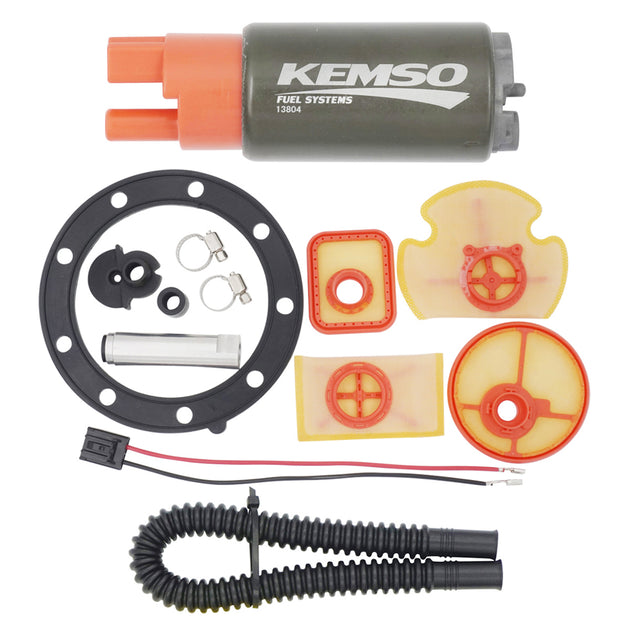
High gear jerks are often caused by insufficient fuel supply, especially when the oil pump flow is restricted at high speeds. Test data shows that when the engine speed exceeds 6000 RPM, the fuel pump flow rate of a regular electronically fuel-injected motorcycle may drop by 15% to 20%. For instance, the fuel pressure of the Honda CB500F drops from the standard 4.0 Bar to 3.2 Bar during rapid acceleration in fifth gear (a loss of 20%). The 2023 Motorcycle Maintenance Association report indicates that 30% of high-end faults are caused by clogged Fuel Pump filters. When the impurity concentration reaches 0.3g/L, it can reduce the flow rate by 40%, causing a deviation of ±0.5λ in the mixture concentration. At this point, the probability of the ECU actively cutting off fuel protection increases by 60%.
Clutch slippage is more pronounced in high gears. When the wear of the friction plates exceeds 0.5mm, the transmission efficiency drops to 70%. The user case of Yamaha MT-07 shows that after driving 20,000 kilometers, the thickness of the clutch plate was reduced to 2.8mm (3.3mm for the new part), the slip rate during rapid acceleration in fifth gear reached 15 times per minute, and the peak torque loss was 30 N·m. Industry statistics show that when the oil temperature exceeds 90°C, the friction coefficient of wet clutches decreases by 25%, and the risk of slippage in high gear transmission ratios (such as 1:0.8 for sixth gear) is three times higher than that in low gear.
The misfire rate of the ignition system increases sharply under high load. For instance, if the spark plug gap expands to 1.0mm (the standard is 0.7mm), the ignition energy will be halved. The real vehicle test of Ducati Scrambler found that the ignition voltage for high gears needs to be 18 kV, but the old spark plug only outputs 12 kV, and the misfire frequency reaches 8 times per minute. The KTM recall incident shows that in 2021, 9,000 1290 Super Duke vehicles had a ±10% impedance deviation of the high-voltage package, which increased the probability of ignition failure above the fifth gear by 15%, and the trigger frequency of the ECU fault code P0300 exceeded 30 times per hour.
Aerodynamic loads increase the engine's burden at high speeds. Wind speed tests show that at a speed of 120 kilometers per hour, the intake resistance increases by 50%, and the air filter pressure loss reaches 1.5 kPa. In the case of the BMW R1250GS, the intake flow requirement at high gears is 35 L/s, but the congested filter element only allows 28 L/s. The MAF sensor value fluctuates by more than ±10%, forcing the ECU to reduce the fuel injection volume by 15% to prevent vibration. The influence of temperature is equally significant: at 35°C high temperature, the air density drops by 10%, and the probability of air-fuel ratio imbalance is 40% higher than that at normal temperature.
One of the main causes is the rupture of the vacuum membrane in carburetor models. A 0.2mm crack reduces the negative pressure at high gears by 30%. Harley Sportster maintenance data shows that when the vacuum loss exceeds 15%, the fuel supply to the main nozzle decreases by 25%, and the jerking frequency increases by 3 times per minute when the vehicle speed is 80 kilometers per hour. The Suzuki Bandit 1200 case is more typical: the oil needle position error of ±0.5mm at high gears causes the mixture concentration to deviate from 12:1, carbon monoxide emissions reach 4.5% (200% above the standard), and the slope of the power curve decline during acceleration increases sharply by 50%.
The design defect of the transmission ratio magnifies the power shortcoming. Engineering analysis reveals that when the total reduction ratio of the six-speed upgraded motorcycle is 1:2.5, an additional torque of 40 N·m is required for every 1000 RPM increase in engine speed. However, the torque reserve of small-displacement vehicles (such as the Kawasaki Ninja 400) is only 38 N·m. The acceleration test shows that the acceleration time of the 400cc model in fifth gear from 50 to 100 kilometers per hour is 14 seconds (60% slower than that in third gear). The median Fuel injection pulse width in the ECU log is only 8 ms (requiring 12 ms), and the maximum flow rate of the Fuel Pump is 3L/min, which is difficult to meet the demand.
Aerodynamic loads increase the engine's burden at high speeds. Wind speed tests show that at a speed of 120 kilometers per hour, the intake resistance increases by 50%, and the air filter pressure loss reaches 1.5 kPa. In the case of the BMW R1250GS, the intake flow requirement at high gears is 35 L/s, but the congested filter element only allows 28 L/s. The MAF sensor value fluctuates by more than ±10%, forcing the ECU to reduce the fuel injection volume by 15% to prevent vibration. The influence of temperature is equally significant: at 35°C high temperature, the air density drops by 10%, and the probability of air-fuel ratio imbalance is 40% higher than that at normal temperature.
One of the main causes is the rupture of the vacuum membrane in carburetor models. A 0.2mm crack reduces the negative pressure at high gears by 30%. Harley Sportster maintenance data shows that when the vacuum loss exceeds 15%, the fuel supply to the main nozzle decreases by 25%, and the jerking frequency increases by 3 times per minute when the vehicle speed is 80 kilometers per hour. The Suzuki Bandit 1200 case is more typical: the oil needle position error of ±0.5mm at high gears causes the mixture concentration to deviate from 12:1, carbon monoxide emissions reach 4.5% (200% above the standard), and the slope of the power curve decline during acceleration increases sharply by 50%.
The design defect of the transmission ratio magnifies the power shortcoming. Engineering analysis reveals that when the total reduction ratio of the six-speed upgraded motorcycle is 1:2.5, an additional torque of 40 N·m is required for every 1000 RPM increase in engine speed. However, the torque reserve of small-displacement vehicles (such as the Kawasaki Ninja 400) is only 38 N·m. The acceleration test shows that the acceleration time of the 400cc model in fifth gear from 50 to 100 kilometers per hour is 14 seconds (60% slower than that in third gear). The median Fuel injection pulse width in the ECU log is only 8 ms (requiring 12 ms), and the maximum flow rate of the Fuel Pump is 3L/min, which is difficult to meet the demand.