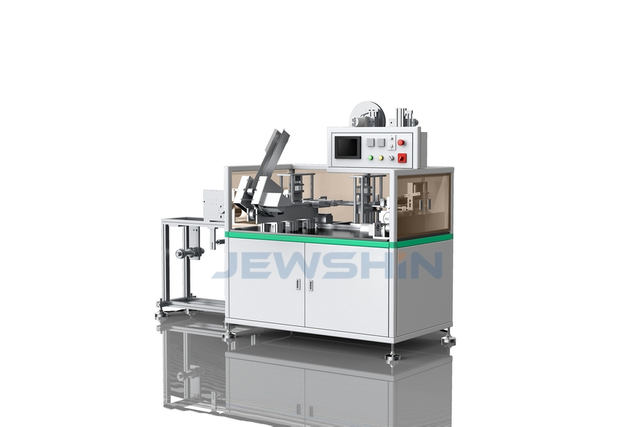
Smart automatic packaging machines use IoT gateways to collect PLC states, servo current, motor torque, sealing temperature, pneumatic pressure, sensor signals, cycle time, alarm codes, and production counts, then make selected records available to authorized service engineers through encrypted remote connections. A 2024 packaging line running 60 packs per minute can produce 86,400 machine cycles in 24 hours, giving technicians enough historical data to compare a failure with normal operation. Instead of diagnosing from an operator’s description, engineers can review the seconds before a stoppage, compare parameter changes, inspect HMI alarms, and check component condition. Remote troubleshooting reduces the time spent finding where a fault started, while physical repair remains with trained staff at the factory.
A packaging machine may contain 100–500 monitored PLC variables once servo axes, temperature controllers, safety devices, photoelectric sensors, vacuum equipment, pneumatic valves, and inspection stations are included. IoT gateways read selected variables through industrial protocols such as OPC UA, Modbus TCP, or vendor-specific Ethernet networks without moving time-sensitive machine control away from the local PLC.
That separation matters because a line completing 70 packages per minute has only about 857 milliseconds available for each package. Filling, carton feeding, sealing, inspection, and rejection cannot wait for a remote server response, so PLC and motion functions stay inside the machine while IoT systems handle monitoring, storage, alarms, service access, and longer-term analysis.
A useful remote service system does not need every PLC tag. It needs enough information to reconstruct what happened before and after a fault.
For example, a film-feeding fault may be recorded together with servo torque, position error, encoder position, registration-sensor state, film tension, machine speed, and the previous 20–60 seconds of alarm history. If servo torque rises from 35% to 72% before position errors appear, technicians have a narrower area to inspect than they would get from a generic “film feed fault” message.
The same method applies to temperature-controlled sealing. Assume a machine is set to 175°C and normally stays within ±2°C during production. If rejected packages rise from 1% to 6% while recorded temperature remains between 174°C and 176°C, remote staff can check jaw pressure, dwell time, product contamination, film position, and heater output instead of assuming the heater has failed.
| Data available remotely | Example reading | What technicians can check |
|---|---|---|
| Sealing temperature | 175°C | Heater and controller condition |
| Servo torque | 68% | Friction, tension, alignment |
| Air pressure | 5.1 bar | Supply, regulator, leaks |
| Cycle time | 0.86 s | Sequence delays |
| Reject rate | 4.8% | Quality or process problems |
| Sensor response | 42 ms | Position and contamination |
Once several measurements are timestamped together, alarm order becomes more informative. A pressure decrease from 6.0 bar to 4.7 bar may occur first, followed 300 milliseconds later by a cylinder timeout and then by carton-position and sealing alarms. Looking only at the final HMI alarm can send maintenance toward the wrong station; chronological records show which event occurred first.
That becomes especially useful on cartoning machines, where carton pickup, opening, product insertion, flap folding, closing, coding, and discharge depend on tightly coordinated mechanical and sensor sequences. At 120 cartons per minute, one cycle lasts about 500 milliseconds, so a sensor responding 80–100 milliseconds late can interrupt a sequence even when the component still appears functional during manual inspection.
Historical storage helps with faults that disappear after restart. A sensor might fail once in 5,000 cycles, or roughly every 83 minutes on a 60-cycle-per-minute machine. An engineer arriving several hours later may see normal operation, while stored PLC states and sensor timestamps still show the abnormal cycle and the conditions immediately before it.
Intermittent faults become easier to investigate when engineers can compare one failed cycle against hundreds or thousands of successful cycles using the same variables.
Comparison also works for gradual mechanical changes. Suppose a servo axis normally requires 28–32% torque at a fixed speed. Over 30 production days, its median torque rises to 45%, while cycle time increases by 8%. Engineers can ask local maintenance to inspect lubrication, belt tension, bearings, guides, contamination, or mechanical alignment before replacing the motor or servo amplifier.
Pneumatic equipment offers another measurable example. A cylinder may normally travel from its home sensor to its end sensor in 180 milliseconds. If the same movement gradually reaches 260 milliseconds while plant pressure remains at 6 bar, remote staff can compare valve timing, cylinder seals, flow controls, tubing, and mechanical resistance rather than treating the entire compressed-air system as one possible cause.
Machine builders can make those comparisons at the edge instead of continuously transmitting every raw measurement. A gateway may calculate minimum, maximum, average, standard deviation, or cycle-by-cycle values locally and upload a smaller record. If 200 variables are sampled once per second, the system receives 17.28 million readings per day; selective storage keeps remote diagnostics useful without retaining unnecessary high-frequency data.
High-frequency information can still be preserved around abnormal events. A gateway sampling a servo signal at 100 Hz can retain 10 seconds before and 20 seconds after an alarm, producing 3,000 samples for that signal. Engineers receive detailed information around the failure without storing 8.64 million samples from the same signal every 24 hours.
Remote HMI access adds operating context to those measurements. A technician can inspect active recipes, machine modes, counters, alarm pages, and parameter screens while speaking with the factory operator. If a format change reduces output by 15%, comparing the current recipe with the last approved settings can reveal whether acceleration, dwell time, sensor delay, or conveyor speed was changed.
Configuration records make parameter problems easier to separate from hardware problems. A label delay changed from 120 milliseconds to 165 milliseconds represents a 37.5% increase, enough to shift label placement even when the labeler, encoder, and product sensor remain mechanically sound. Recording when settings changed allows technicians to compare the start of a quality problem with the configuration history.
Remote PLC information goes further by showing sequence states and I/O conditions. If a machine waits at step 37 because one confirmation input remains false, an engineer can identify the expected sensor or actuator without asking an operator to inspect every device. The service conversation moves from “the machine will not start” to a specific state, timestamp, and component signal.
Access still needs strict limits. IEC 62443 industrial cybersecurity practices support network segmentation, controlled authentication, defined user privileges, secure communication, and management of industrial system access. A remote technician who only needs diagnostic information should not automatically receive permission to modify PLC logic, safety settings, or production parameters.
A practical architecture can place the packaging machine on an industrial network, connect it to an approved gateway, and restrict outbound and inbound communication according to factory policy. In a 2025 facility with 20 packaging machines, individual user accounts and session logs are preferable to one shared service password because administrators can identify which technician accessed which machine and when.
Remote sessions can also be enabled only during an approved service period. Multi-factor authentication adds another verification step, while VPN or similarly protected communication prevents ordinary internet exposure of PLC and HMI interfaces. Security becomes more important as factories connect dozens of machines that may remain in service for 10–20 years.
Data quality needs similar attention. A temperature sensor reading 5°C too high can lead an engineer toward the wrong explanation even if the IoT connection works perfectly. Timestamp differences also matter: two controllers separated by 500 milliseconds can make the recorded order of fast machine events misleading on equipment completing one cycle every 700 milliseconds.
For that reason, commissioning should verify sensor calibration, timestamp synchronization, engineering units, alarm descriptions, sampling rates, and retention periods. A pressure value recorded as “52” is far less useful remotely when the engineer cannot tell whether the unit is psi, kPa, or another scale. Clear tag names and units reduce interpretation errors during service.
Camera feeds can fill gaps where numerical data cannot show mechanical behavior. At 60 frames per second, video provides one frame every 16.7 milliseconds, enough to review carton movement, film tracking, product accumulation, or an actuator that hesitates visibly. Matching the camera timestamp with PLC and servo records lets technicians compare physical movement with controller states.
Video is especially useful when a fault involves material rather than electronics. A carton may deform during opening, a flexible package may enter a sealing area incorrectly, or film may wander several millimeters while all sensors remain electrically healthy. Machine data identifies when the sequence changed; synchronized video shows what the packaging material was doing at that time.
Remote diagnosis also changes spare-parts preparation. If records show normal motor current but a failed position sensor, an on-site technician can arrive with the sensor rather than bringing a servo motor, controller, cables, and several unrelated components. For overseas installations, avoiding even one unnecessary service trip can remove days of waiting caused by travel scheduling and parts shipment.
Fleet data extends the same approach beyond one machine. An OEM supporting 100 similar machines can compare alarm frequency, servo torque, temperature stability, cycle counts, and component operating hours across installations. If 12% of machines using the same component develop similar timing errors after approximately 8,000 operating hours, engineering teams have a measurable pattern to investigate.
The limits remain physical. No IoT platform can tighten a loose fastener, clean adhesive from a sensor, replace a bearing, repair damaged wiring, or remove a crushed carton. Remote information is most useful when the machine was designed with enough sensors and diagnostic states to tell an engineer where local inspection should begin.
For machine builders, that requirement changes what should be recorded. A sealing station benefits from actual and target temperature, heater output, jaw position, pressure, dwell time, cycle number, and alarm history. A film-feed section benefits from position error, torque, encoder values, registration signals, tension, and reel status. Monitoring 10 well-selected measurements can be more useful than displaying 200 unrelated PLC tags.
A well-configured system can therefore give a remote engineer three levels of information: current machine state, event history around the failure, and longer-term trends. If reject rate moves from 1.2% to 4.5% over seven days while servo torque rises 20% and cycle time remains unchanged, the combination gives maintenance a much more focused inspection path than any single alarm can provide.
Physical repair still belongs to qualified personnel beside the equipment, particularly around guards, electrical cabinets, pneumatic energy, servo motion, and safety circuits. IoT improves the stage before repair: identifying the affected station, reproducing the event from stored data, checking whether settings changed, and preparing the appropriate inspection or replacement work before production loses additional hours.